Chronic Low Back Pain in Overland Park: How the McKenzie Method and McGill's Big 3 Fit Into a Real Plan
Dr. Eric Phillips
August 12, 2026
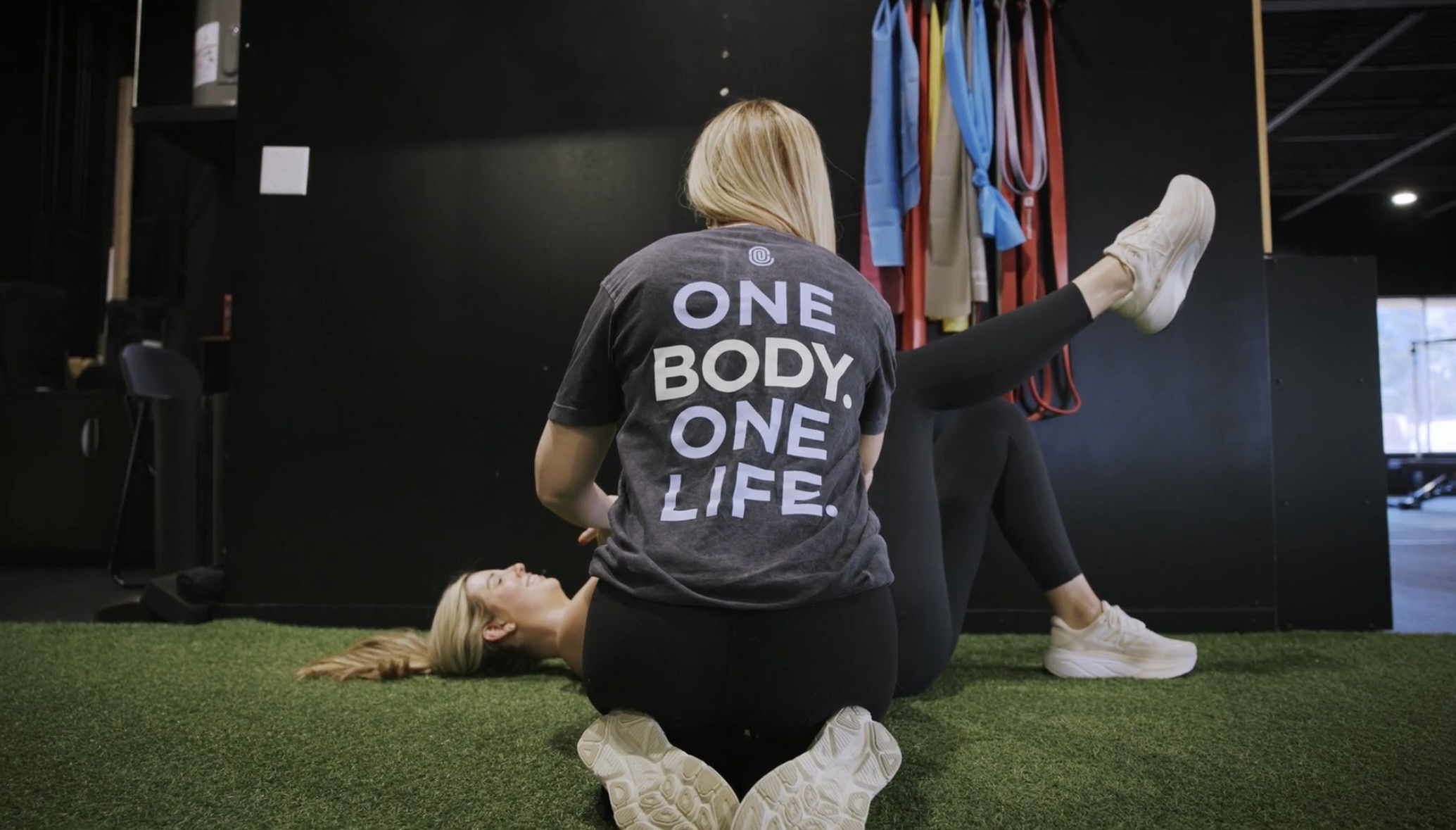
If you're dealing with chronic low back pain in Overland Park, you're probably not new to this. You've tried things. You've put in real effort. You want to get better — and it's frustrating that no one has fully explained what's actually going on, or what it's going to take to fix it for good.
That frustration is usually a sign of one thing: your pain has been treated at the surface level, over and over, without anyone ever building a complete plan around what's actually driving it.
Two of the most useful tools we use for chronic and recurring low back pain are the **McKenzie Method** and **McGill's Big 3**. Both are well-established, both are backed by real clinical reasoning, and both get misunderstood constantly — either dismissed as "just stretches" or treated like a magic fix that works the same way for everyone. Neither is true. Here's what they actually are, who they help, and where they fit into real, long-term relief.
Why Chronic Low Back Pain Doesn't Respond to Generic Advice
Most low back pain doesn't improve long-term because it's only ever treated at the surface. You stretch what feels tight. You rest a little longer. You avoid the things that hurt. You try a few exercises you found online that worked for someone else's back, not necessarily yours.
That approach can quiet things down temporarily. It rarely holds, because it never answers the actual question: *why does your specific back keep ending up here?*
Chronic low back pain is usually the result of more than one thing stacked together — often some combination of:
- ·Muscle strain or ligament sprain that never fully resolved
- ·Disc bulge or disc irritation
- ·Facet joint restriction or irritation
- ·Sciatica or piriformis-related nerve irritation
- ·Poor hip mobility or hip strength forcing the low back to compensate
- ·Reduced trunk control and core endurance
- ·Repeated bending, lifting, or sitting patterns that keep loading the spine the same wrong way
Two people can both say "my back hurts" and be dealing with completely different underlying problems. That's exactly why a real evaluation — not a guess based on symptoms alone — matters before treatment starts.
What Is the McKenzie Method?
The McKenzie Method, developed by physiotherapist Robin McKenzie, is a system of assessment built around how your symptoms respond to repeated movement and different positions.
The core idea: for some people, specific repeated movements cause pain that has spread into the hip, glute, or leg to move back toward the spine — a pattern called centralization. As that happens, irritation is decreasing, which is a genuinely useful signal for building the rest of your plan.
The McKenzie Method tends to help most when:
- ·Pain worsens with repeated bending or prolonged sitting
- ·Symptoms travel into the glute or leg
- ·A specific repeated movement or position clearly reduces symptoms
- ·You respond well to a clear "here's what helps, here's what doesn't" framework
Not everyone shows this pattern, and forcing McKenzie-style extension exercises onto someone whose back doesn't respond that way can do more harm than good. This is exactly why assessment has to come before exercise — not the other way around.
What Are McGill's Big 3?
Dr. Stuart McGill's Big 3 are a set of exercises designed to build trunk stability and muscular endurance around the spine, without relying on repetitive spinal flexion the way old-school sit-ups do.
1. Curl-Up
Lie on your back with one knee bent and the other leg straight. Place your hands under the natural arch of your lower back to help maintain it. Lift your head and shoulders slightly off the floor in a controlled brace, hold briefly, then lower back down.
2. Side Plank
Lie on your side with your elbow under your shoulder and your legs stacked. Lift your hips so your body forms a straight line from shoulder to feet. Hold while breathing steadily, then switch sides.
3. Bird Dog
Start on hands and knees, wrists under shoulders, knees under hips. Extend one arm and the opposite leg at the same time while keeping your trunk still and your spine neutral. Hold briefly, then return and switch sides.
These build the kind of stiffness and control your spine needs to tolerate daily load — bending, lifting, carrying, twisting — without collapsing into the same pattern that's been driving your pain.
**One honest caveat:** McGill's Big 3 are not automatically right for every person on day one. Some people need a regression, a different starting position, or less range before these are appropriate. The goal was never to force a named program onto every back — it's to find the right starting point for the person in front of us.
The Hip Connection Most People Miss
A large share of chronic low back pain isn't purely a back problem. If your hips aren't moving well or aren't controlling load well during bending, hinging, rotating, or walking, your low back ends up absorbing stress it was never meant to handle.
That shows up as things like:
- ·Reduced hip rotation
- ·Poor single-leg stability
- ·Weakness that doesn't show up until movement gets more demanding
- ·Poor coordination during hinging and lifting
This is why an assessment that only looks at your low back — and never checks your hips — is an incomplete assessment. Your back usually isn't broken. It's often just overworked, covering for something else that isn't doing its job.
How This Fits Into a Real Plan at Identity
McKenzie principles and McGill's Big 3 are genuinely useful tools. They are not, on their own, a treatment plan. Here's how we actually put them to work:
**1. Evaluation** — A real assessment of what's driving your pain, what movements aggravate it, and what your body currently tolerates.
**2. Calm the irritation** — Hands-on care, movement modification, and symptom-relieving strategies to bring things down to a manageable level.
**3. Find the right strategy** — If your pattern fits McKenzie principles, we use the specific movements and positions that centralize or reduce your symptoms. If it doesn't, we don't force it.
**4. Build trunk control and stability** — McGill's Big 3, when and if appropriate for where you're starting from, to build real endurance and support around your spine.
**5. Progress into real life** — Rebuilding your capacity to bend, lift, carry, rotate, and stand on one leg with confidence — not just perform exercises in a clinic.
**6. Build a plan for staying better** — Long-term relief comes from consistency and progression, not a one-time fix.
Common Questions About Chronic Low Back Pain, McKenzie, and McGill's Big 3
Can chiropractic care actually help chronic low back pain?
For most mechanical, chronic low back pain, yes. Chiropractic care can improve joint movement, reduce irritation, and make it easier to progress into the rehab and strength work that creates lasting change. We pair hands-on care with movement and rehab so you're never relying on passive treatment alone.
Is the McKenzie Method the same as generic back stretches?
No. It's a structured assessment system based on how your specific symptoms respond to repeated movement — not a generic stretching routine. Some people respond well to McKenzie-style extension; others don't, which is exactly why assessment comes first.
Are McGill's Big 3 good for everyone with back pain?
Not automatically. Some people do well with the standard version right away. Others need a regression or a different starting point based on their current pain level and movement tolerance. The right progression depends on you, not a generic program.
How do I know if my low back pain might be disc-related?
Disc-related low back pain often involves pain with bending, sitting, standing up from a chair, coughing, or sneezing — sometimes with symptoms traveling into the glute or leg. That said, don't self-diagnose off symptoms alone; a proper evaluation is what actually confirms it.
When should I get chronic low back pain checked out instead of continuing to manage it myself?
If your pain keeps returning, limits your activity, travels into your leg, or simply hasn't meaningfully improved despite real effort on your part, it's worth a real evaluation. The longer a pattern repeats without being addressed, the more it tends to reinforce itself.
Ready for an Actual Plan?
If you've been managing your low back pain instead of fixing it — cycling through rest, stretches, and exercises that worked for someone else — the McKenzie Method and McGill's Big 3 might genuinely be part of your answer. But they only work as part of a real plan built around your specific pattern, not a program picked off the internet.
Come in for a real assessment. We'll find out exactly what's driving your pain and build a plan to fix it — not just manage it for another few months.
Ready to get a real plan?
If what you read here resonates — come in. We will do a real assessment, find what is actually going on, and build a plan around where you want to go.
★★★★★242 five-star reviews on GoogleTakes 2 minutes. No commitment.